


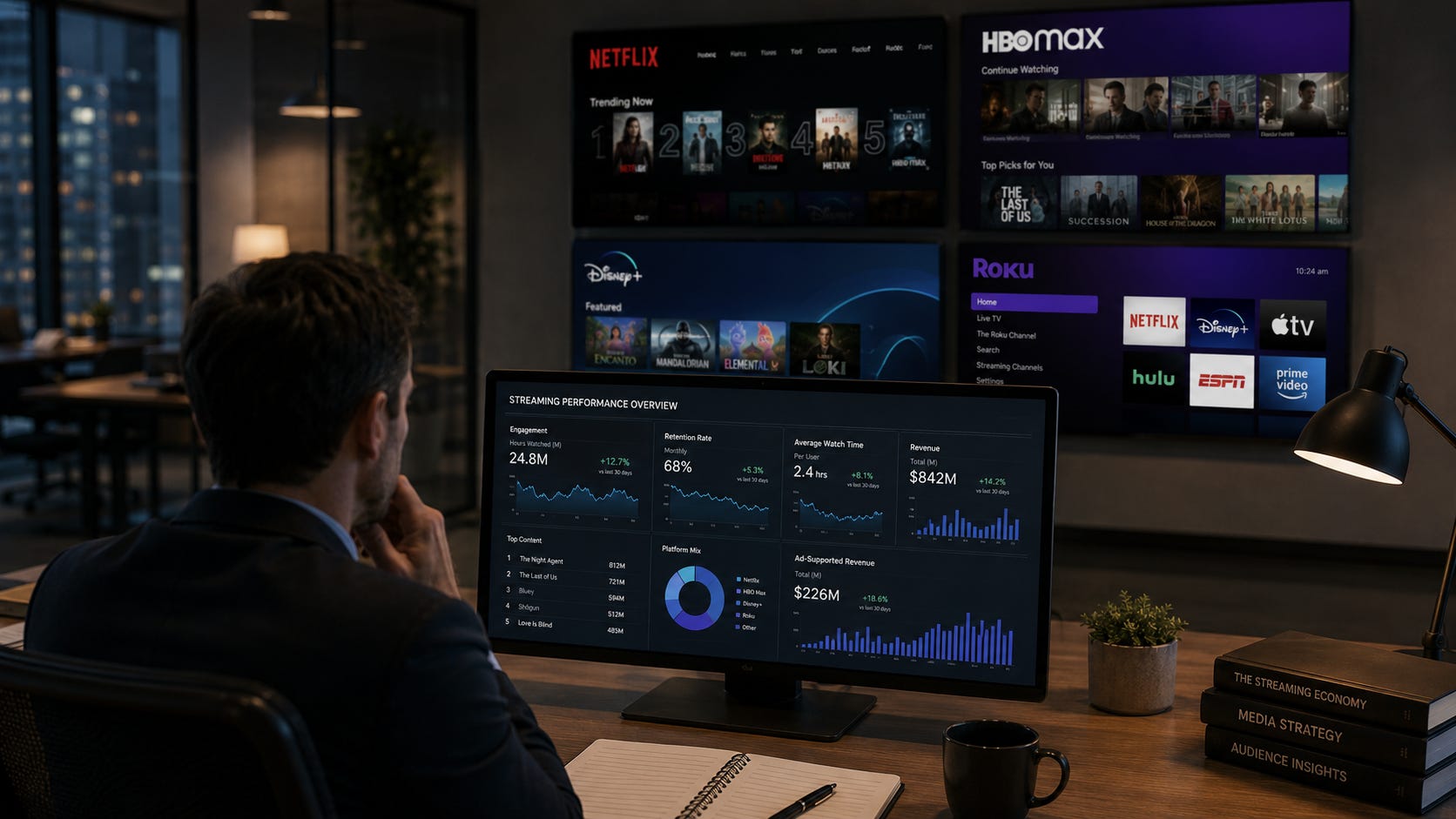
For years, the streaming wars were defined by one metric: subscriber growth. Every quarterly earnings report seemed to revolve around how many new customers Netflix, Disney+, HBO Max, Paramount+, Peacock, or another platform could attract. Wall Street rewarded growth above all else, and media companies spent billions of dollars producing original content, acquiring intellectual property, and launching international expansions in pursuit of ever-larger audiences.
That era appears to be ending.
Across the streaming industry, a fundamental shift is underway. Rather than focusing primarily on adding subscribers, major platforms are increasingly prioritizing retention, engagement, and profitability. The goal is no longer simply convincing viewers to sign up. It is keeping them subscribed month after month while generating sustainable revenue from each customer.
The transition reflects a broader reality facing the entertainment industry. Most major streaming services have already reached a significant portion of their potential audience in North America and Europe. Subscriber growth has slowed, competition has intensified, and investors have begun demanding profits instead of promises.
Netflix, once the undisputed growth story of the streaming age, has become one of the clearest examples of this evolution. The company has shifted its messaging away from subscriber counts and toward engagement metrics. Rather than emphasizing how many people join the platform, executives increasingly discuss viewing hours, audience retention, advertising revenue, and average revenue per user.
The strategy recognizes an important truth: acquiring a new subscriber is often more expensive than keeping an existing one.
Disney has made similar adjustments. After years of aggressive expansion fueled by franchises such as Marvel, Star Wars, and Pixar, the company has focused heavily on improving profitability within its direct-to-consumer business. Executives have emphasized reducing churn, increasing advertising revenue, and encouraging subscribers to remain within the Disney ecosystem through bundled offerings that combine Disney+, Hulu, and ESPN.
Warner Bros. Discovery has also pursued a retention-first model. The company has increasingly treated Max as a long-term engagement platform rather than a rapid-growth service. By integrating prestige dramas, reality programming, sports, documentaries, and legacy content libraries, the company aims to create a viewing experience that encourages customers to stay subscribed year-round rather than joining for a single show.
The changing economics of streaming have also altered how content is released. During the early years of the streaming boom, platforms often dropped entire seasons at once in hopes of generating cultural buzz and attracting subscribers. While binge releases remain popular, many companies are experimenting with weekly rollouts, split-season strategies, and staggered releases designed to keep viewers engaged for longer periods.
The approach mirrors tactics long used by traditional television networks. Instead of allowing a subscriber to watch an entire series over a weekend and immediately cancel, platforms can stretch engagement across multiple weeks or even months.
This focus on retention is also influencing the types of content being produced. While blockbuster franchises remain important, executives are increasingly interested in programming that creates consistent viewing habits. Reality competitions, live events, sports programming, documentaries, and creator-led content can often generate recurring engagement at a fraction of the cost of large-scale scripted productions.
The rise of creator-driven content represents another significant shift. Platforms that once viewed YouTube creators as competitors are increasingly recognizing their influence. Younger audiences often spend more time watching independent creators than traditional television shows. As a result, streaming companies are exploring partnerships, licensing agreements, and new formats that incorporate creator-driven storytelling into their broader content strategies.
Artificial intelligence is emerging as another tool in the retention battle. Streaming companies are investing heavily in AI-powered recommendation systems designed to keep viewers engaged by surfacing content that matches individual preferences. The technology is increasingly used to personalize homepages, improve search functionality, identify audience trends, and inform programming decisions.
Industry executives believe that helping users find something they want to watch quickly may be just as important as producing new content. A platform with thousands of titles has little value if subscribers struggle to discover programming that interests them.
Advertising has become another critical component of the industry’s new economic model. Several major streaming services now offer ad-supported tiers that provide lower-cost subscriptions while generating additional revenue from advertisers. The model allows platforms to serve multiple audience segments while improving overall profitability.
For media companies, the appeal is obvious. A subscriber paying a reduced monthly fee while viewing advertisements can sometimes generate more revenue than a customer on a traditional ad-free plan.
The emphasis on profitability marks a dramatic departure from the industry’s earlier mindset. During the height of the streaming wars, companies frequently tolerated significant losses in pursuit of market share. Today, investors are increasingly evaluating platforms based on their ability to generate sustainable earnings rather than headline-grabbing subscriber numbers.
The result is a more mature streaming landscape. Instead of racing to attract every possible customer, companies are focusing on building businesses capable of retaining loyal audiences over the long term.
The shift may not generate the same excitement as the explosive growth stories that defined the industry’s first decade. Yet it reflects a broader reality about the future of media. In an increasingly crowded entertainment ecosystem, success may depend less on convincing people to subscribe and more on giving them a reason to stay.
For viewers, the change could shape everything from release schedules and content recommendations to advertising experiences and subscription pricing. For media companies, it represents a recognition that the streaming wars have entered a new phase—one where engagement, retention, and profitability matter more than growth alone.
The battle for attention is no longer about getting through the front door. It is about making sure audiences never want to leave.